Lead generation laws for attorneys: what changed, state by state
The law on paying for client information and referrals is changing. Colorado's 2026 statute, ABA Model Rule 7.2, and the bar opinions attorneys should know.
At a glance
- signed by the Governor on June 3, 2026 (Colo. SB26-174 bill history, Colorado General Assembly)
- August 12, 2026, if adjournment sine die was May 13, 2026 (SB26-174 § 3 (effective date), enrolled act)
- damages of ten thousand dollars per violation plus reasonable attorney fees and costs (C.R.S. § 6-1-741(6)–(9), SB26-174 enrolled act)
- no recommendation, neutral and disclosed selection, price untied to outcome (NYSBA Ethics Op. 1294 (2026))
- no enacted statute and no pending bill outside Colorado

If you pay anyone for information about a prospective client — per inquiry, per case, or by monthly subscription — the rules governing that payment moved in 2026. Colorado enacted a consumer-protection statute aimed squarely at the practice (Colo. SB26-174 bill history, Colorado General Assembly), New York's ethics committee set out when paying an online platform is permissible (NYSBA Ethics Op. 1294 (2026)), and California enacted a statute with a private right of action for unlawful solicitation (Cal. SB 37 (2025), Stats. 2025, ch. 645). This page is the map: the layers of authority, what Colorado's statute says, what other jurisdictions have said, and the questions worth asking any vendor.
It is written for attorneys and it is not legal advice. Everything below is stated as of September 24, 2026, with a citation to the primary source for every statement about a law, rule, or opinion.
What this page covers, and what it is not
This page covers what the law and the rules say about attorneys paying third parties for prospective-client information, introductions, and recommendations. It distinguishes four kinds of authority, because they carry different weight:
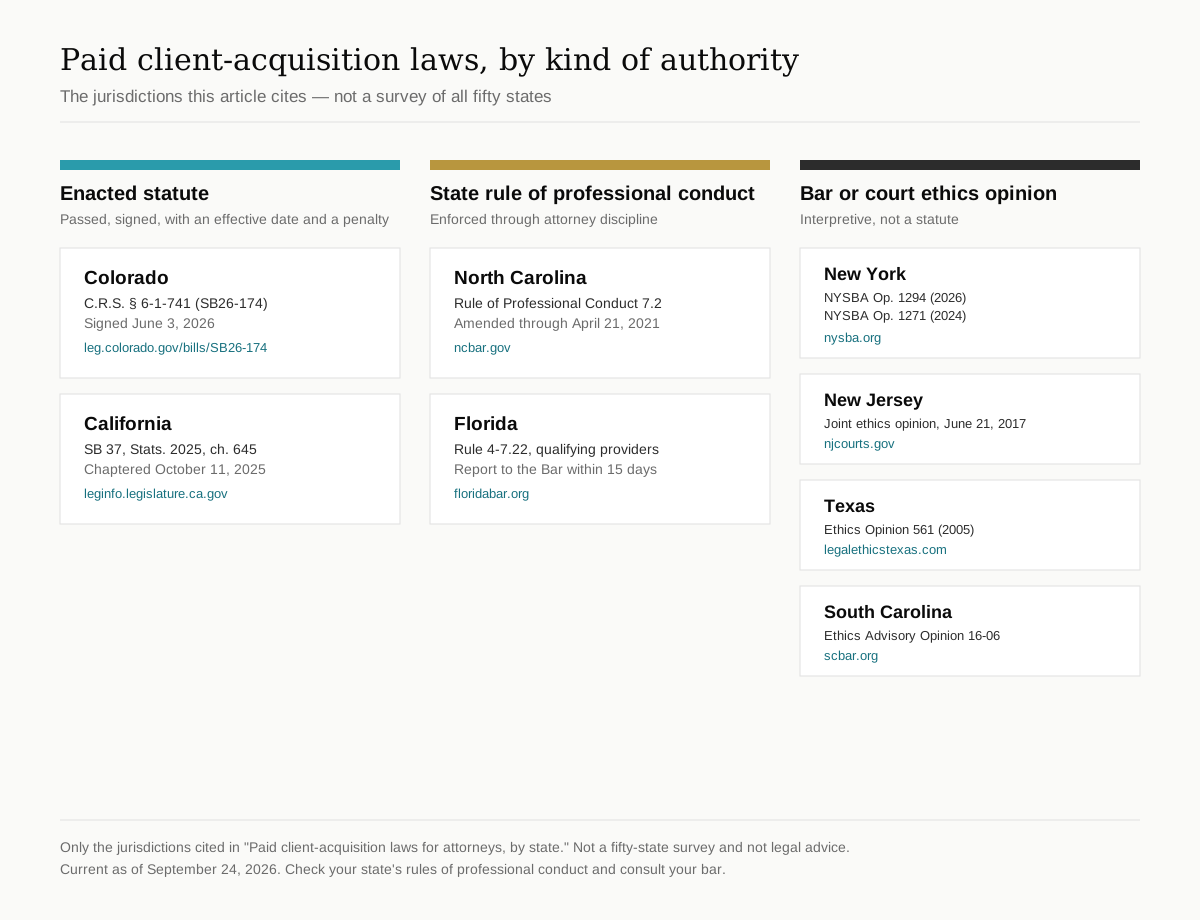
- Enacted statutes — passed, signed, with an effective date and a penalty. Colorado's C.R.S. 6-1-741 is one (Colo. SB26-174 bill history, Colorado General Assembly; C.R.S. § 6-1-105(1)(tttt); SB26-174 § 3, enrolled act).
- State rules of professional conduct — enforced through discipline. North Carolina's Rule 7.2 is the example quoted below (N.C. State Bar, Rule 7.2).
- Bar and court ethics opinions — interpretive, not statutes.
- ABA Model Rules — model text. This page does not quote them and does not treat them as law; every rule described below is one a named state has adopted, cited to that state's own source.
It reads as one question — "can I pay for this?" — but it is three. The rules of professional conduct carry the prohibition on paying for a recommendation, the fee-sharing rule and the solicitation rule, and discipline flows from them — in North Carolina they are Rules 7.2, 5.4 and 7.1 as cited below (N.C. State Bar, Rule 7.2). Before 2026, every other jurisdiction covered on this page regulated the subject through those rules and through ethics opinions rather than by statute (NYSBA Ethics Op. 1294 (2026); S.C. Ethics Advisory Op. 16-06); Colorado changed that in 2026 (Colo. SB26-174 bill history, Colorado General Assembly), as California did on the solicitation side in 2025 (Cal. SB 37 (2025), Stats. 2025, ch. 645). A statute can reach the vendor as well as the attorney and carry money damages rather than discipline (C.R.S. § 6-1-741(6)–(9), SB26-174 enrolled act). Ethics opinions are where a rule meets a specific business model, which is why they do more practical work below than the rule text; a vendor's contract can satisfy one layer and fail another.
What this page is not: advice about your practice, or a claim that any particular service is lawful or unlawful. Those judgments belong to you and your state's regulator.
The baseline rule: you may not pay for a recommendation
The starting point in the states surveyed here is a prohibition on giving anything of value to someone for recommending your services, with narrow exceptions. North Carolina's Rule 7.2(b), amended through April 21, 2021, prohibits compensating anyone for recommending the lawyer's services except for reasonable advertising costs, the usual charges of a compliant intermediary organization or prepaid plan, the purchase of a practice, and nominal gifts (N.C. State Bar, Rule 7.2).
The operative word is recommending, and North Carolina defines it: a communication contains a recommendation if it endorses or vouches for a lawyer's credentials, abilities, competence, character, or other professional qualities (N.C. State Bar, Rule 7.2, cmt. 2). That definition is the hinge. Publishing your name and practice areas is advertising; telling the consumer you are the right lawyer for them is recommending, and paying for that is what the rule prohibits (N.C. State Bar, Rule 7.2).
The "lead generator" carve-out, and the conditions attached to it
Several states attach a comment permitting payment to a service that generates prospective-client inquiries, subject to conditions. North Carolina's comment 5 states that a lawyer may pay others for generating client leads, such as Internet-based client leads, as long as the lead generator does not recommend the lawyer, the payment is consistent with Rules 1.5(e) and 5.4, and the lead generator's communications are consistent with Rule 7.1 (N.C. State Bar, Rule 7.2).
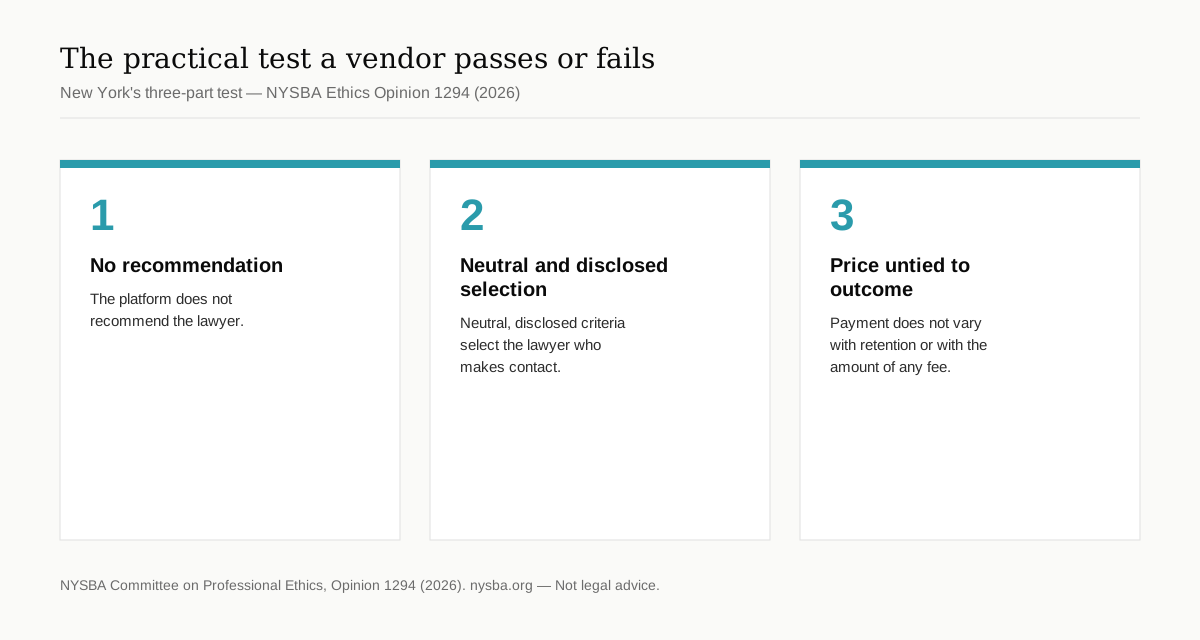
New York's ethics committee turned that into a three-part test in Opinion 1294, issued March 12, 2026: a lawyer's payment to an online platform that shares anonymized user information with employment lawyers — who then pay to have identifying information disclosed with the user's consent — is a permissible payment to a lead generator rather than a prohibited payment to obtain employment, as long as (i) the platform does not recommend the lawyer, (ii) it uses neutral, disclosed criteria to select the lawyer who makes contact, and (iii) the payment does not vary with whether a retention results or with the amount of any fee (NYSBA Ethics Op. 1294 (2026)). The opinion runs through Rules 1.18, 5.3, 5.4, 7.1, 7.2 and 7.3 (NYSBA Ethics Op. 1294 (2026)).
Those three conditions are the practical test a vendor either passes or fails: no recommendation, neutral and disclosed selection, price untied to outcome.
Colorado 2026: a statute, not just a rule

Colorado did something structurally new. SB26-174, "Prohibit Lead Generation Legal Marketing," was introduced April 21, 2026, passed the Senate April 30, passed the House May 7, and was signed by the Governor on June 3, 2026 (Colo. SB26-174 bill history, Colorado General Assembly). Section 2 of the act adds C.R.S. 6-1-741 (C.R.S. § 6-1-741(2)(a), SB26-174 enrolled act).
What it defines. "Lead generation legal marketing" means any form of marketing in which an attorney, law firm, or licensed legal paraprofessional pays money or other compensation to a third party to receive information about a potential client or case, including contact information or information about the legal issue (C.R.S. § 6-1-741(2)(a), SB26-174 enrolled act). The definition expressly reaches compensation paid directly, indirectly, on a per-lead or per-case basis, or as a subscription model, and compensation paid through intermediaries or affiliates (C.R.S. § 6-1-741(2)(a), SB26-174 enrolled act). Fee sharing between licensed attorneys, firms, or licensed legal paraprofessionals is excluded, so long as it complies with state law and Colorado Supreme Court rules (C.R.S. § 6-1-741(2)(a), SB26-174 enrolled act).
What it leaves alone. "Traditional legal marketing" is marketing in which the attorney, firm, or licensed legal paraprofessional advertising their services is clearly identified to the consumer; it expressly includes search engine optimization, pay-per-click internet advertising, radio, television, streaming and billboard advertising, and listing in legal directories in which the attorney's name or identity is clearly disclosed, and subsection (5) states that the section does not prohibit it (C.R.S. § 6-1-741(2)(b), (5), SB26-174 enrolled act).
What it prohibits. Unless a person meets the subsection (4) criteria, a person shall not pay money or other compensation for lead generation legal marketing services in the state, engage in that practice in the state, or sell leads to an attorney, law firm, or licensed legal paraprofessional in the state (C.R.S. § 6-1-741(3)–(4), SB26-174 enrolled act). Subsection (4) permits soliciting a potential client or marketing for legal services in the state if the person is authorized by the Colorado Supreme Court to practice law there, is working on behalf of such a person who is clearly identified in the marketing material, or is a nonprofit organization engaged in legal services in the state (C.R.S. § 6-1-741(3)–(4), SB26-174 enrolled act).
What it costs. A violation of section 6-1-741 is a deceptive trade practice under the Colorado Consumer Protection Act, added at C.R.S. 6-1-105(1)(tttt) (C.R.S. § 6-1-105(1)(tttt); SB26-174 § 3, enrolled act). A court may order injunctive relief; an attorney, law firm, licensed legal paraprofessional, or any affected consumer may bring a civil action; and a prevailing claimant is entitled to damages of ten thousand dollars per violation plus reasonable attorney fees and costs (C.R.S. § 6-1-741(6)–(9), SB26-174 enrolled act). The Attorney General or a district attorney may also bring a criminal action where the conduct constitutes a crime under the Colorado Criminal Code — criminal impersonation, fraud offenses, or racketeering activity among them (C.R.S. § 6-1-741(6)–(9), SB26-174 enrolled act).
When. The act takes effect at 12:01 a.m. on the day after the ninety-day period following final adjournment — August 12, 2026, if adjournment sine die was May 13, 2026 — subject to the referendum petition clause, and applies to conduct occurring on or after that date (SB26-174 § 3 (effective date), enrolled act).
Why the legislature said it acted. The declaration finds the practice "inherently misleading" because the person conducting it purports to be an attorney or a firm's representative but is not, describes bait-and-switch and look-alike advertising, impersonation and fraud, and finds that purchasing attorneys are misled too, because the information is often sold to multiple firms, is erroneous, or does not represent a viable case (C.R.S. § 6-1-741(1), SB26-174 enrolled act).
The unresolved tension. The Colorado Office of Attorney Regulation Counsel's May 2026 update describes SB26-174 as amending the Consumer Protection Act to prohibit lead generation marketing, and notes that Colo. RPC 7.2 cmt [5] allows lawyers to pay others for generating client leads "as long as the lead generator does not recommend the lawyer" and the payment is consistent with other rules; as of May 21, 2026 the Governor had not yet signed (Colo. Office of Attorney Regulation Counsel, OARC Update May 2026). A comment to the rule of professional conduct and a new statute now point in different directions on the same conduct, and subsection (9) preserves the Supreme Court's authority over the practice of law (C.R.S. § 6-1-741(6)–(9), SB26-174 enrolled act). This page states the tension; it does not resolve it.
The full walkthrough, subsection by subsection, is on the Colorado page: what Colorado's law requires.
What other states have said
In the jurisdictions surveyed below, regulation runs through rules and ethics opinions rather than statutes. The detailed grid is on the state page: rules by state: enacted, pending, bar opinions. In summary:
- New York. Opinion 1294 (2026) sets the three-part test above (NYSBA Ethics Op. 1294 (2026)). Opinion 1271, issued August 20, 2024, held that paying an online bidding service under a fee structure that retains part of the legal fee is fee sharing with a nonlawyer in violation of Rule 5.4(a), and that the service's claim to evaluate participating lawyers' skill constitutes a "recommendation" under Rule 7.2(a) (NYSBA Ethics Op. 1271 (2024)).
- New Jersey. A joint opinion issued June 21, 2017 by committees appointed by the Supreme Court of New Jersey concluded that New Jersey lawyers may not participate in the Avvo legal service programs, because they require sharing a legal fee with a nonlawyer in violation of RPC 5.4(a) and paying an impermissible referral fee in violation of RPC 7.2(c) and 7.3(d); calling the payment a "marketing fee" does not determine the purpose of the fee (N.J. ACPE Joint Op. 732 / CAA Joint Op. 44 / UPL Joint Op. 54 (2017)).
- Texas. Opinion 561, issued August 2005, concluded that a lawyer may not pay a fee to be listed on a privately sponsored internet site that obtains information from potential clients about their legal problems and forwards it to lawyers who paid to be listed; it drew the line between a directory from which the consumer chooses (advertising) and a site that ascertains a consumer's legal needs and connects them with a lawyer (Tex. Ethics Op. 561 (2005)).
- South Carolina. Ethics Advisory Opinion 16-06 concluded that a platform charging attorneys a "per service marketing fee" that varies with the legal service — for example $200 on a $995 uncontested divorce — violates the Rule 5.4(a) fee-sharing prohibition, and alternatively violates the Rule 7.2(c) prohibition on paying for a referral (S.C. Ethics Advisory Op. 16-06).
- Florida. Rule 4-7.22 governs "qualifying providers," a category that includes lawyer referral services, matching services, group or pooled advertising programs, directories, and tips or leads generators; a participating lawyer must report participation to the Bar within 15 days, may accept business only from providers whose fee is not a division or sharing of fees, and must ensure the provider follows the advertising rules and does not imply Bar endorsement (Fla. Bar, Rule 4-7.22 qualifying-providers guidance).
- California. SB 37 (Umberg), chaptered October 11, 2025 as Chapter 645, creates a civil action with statutory damages from $5,000 to $100,000 plus fees and injunctive relief for runner-and-capper and unlawful-solicitation violations, requires joint advertising agreements in which the attorney takes responsibility for content, broadens "advertisement" to any written, recorded or electronic means, and requires disclosure of at least one bona fide office location (Cal. SB 37 (2025), Stats. 2025, ch. 645).
What no other state has done
As of September 24, 2026, our review of state legislative, court, and bar association websites found no enacted statute and no pending bill outside Colorado that makes an attorney's purchase of prospective-client information a consumer-protection violation. Every other jurisdiction covered here regulates the subject through its rules of professional conduct and through ethics opinions, cited above. That review has a date on it, and a bill introduced next session would change the answer — but nothing here should be read as saying other states are following Colorado. They are not.
One near-miss: Indiana's HB 1125 (2021) appears in the Indiana courts' legislative update under the heading "deceptive lead generation," but it concerns deceptive advertising for medical devices and legend drugs, not attorneys paying for client information (Ind. Courts legislative update, HB 1125 (2021)).
Fee sharing is the second trap
The first trap is paying for a recommendation. The second is paying a percentage. Three of the opinions above turn on it: New York found that a fee structure retaining part of the legal fee is fee sharing with a nonlawyer under Rule 5.4(a) (NYSBA Ethics Op. 1271 (2024)); New Jersey found the same and added that the "marketing fee" label does not determine the purpose of the fee (N.J. ACPE Joint Op. 732 / CAA Joint Op. 44 / UPL Joint Op. 54 (2017)); South Carolina found that a fee varying with the legal service charged is fee sharing, whatever it is called (S.C. Ethics Advisory Op. 16-06). Regulators look at how the price behaves, not at what it is called. Colorado's statute comes at the same problem from the other direction: its definition sweeps in per-lead, per-case and subscription pricing (C.R.S. § 6-1-741(2)(a), SB26-174 enrolled act).
Questions worth asking any vendor
Every opinion above turned on the mechanics of the arrangement, not its branding. Four questions do most of the work, and each traces to an authority cited above:
- Does it recommend? Does the service endorse or vouch for your credentials, abilities, competence, character, or professional qualities (N.C. State Bar, Rule 7.2)? Does it claim to evaluate participating lawyers' skill (NYSBA Ethics Op. 1271 (2024))?
- Does the price move? Does what you pay vary with whether the person retains you, or with the size of the fee (NYSBA Ethics Op. 1294 (2026); NYSBA Ethics Op. 1271 (2024); S.C. Ethics Advisory Op. 16-06)?
- Who is identified to the consumer? Is the advertising attorney clearly identified, or does the consumer see a brand that is not a law firm (C.R.S. § 6-1-741(2)(b), (5), SB26-174 enrolled act; C.R.S. § 6-1-741(3)–(4), SB26-174 enrolled act)?
- What is being sold? Is the consumer choosing you from a listing, or is the service ascertaining their legal need and connecting them to whoever paid (Tex. Ethics Op. 561 (2005))?
What Legal Locate does and does not do
We describe our own structure, in our own terms. We are not claiming compliance with any statute cited here — that judgment is not ours to make.
Legal Locate is a free legal marketplace: a client describes a legal matter in a few guided steps, licensed attorneys in that client's jurisdiction review it and respond with estimated offers, and the client reviews those offers and chooses who to locate (how Legal Locate is structured). Legal Locate does not recommend, rank, or select attorneys, is not a lawyer referral service, and receives no portion of any legal fee (Legal Locate, About). Every verified attorney participates on identical terms, and an attorney's bar license is verified against official state bar records before they can respond to a posted case — verification confirms active bar admission and is not a quality rating (Legal Locate, About). Fee figures shown in the app are non-binding estimates; the binding fee is set between attorney and client in a written engagement agreement (fees and estimates in the Terms of Service, § 8).
What you can do instead
If the answer to "can I pay for this?" is unclear, the channels that do not raise the question are the ones most practices already run on: advertising in which you are the advertiser, a listing where the consumer chooses you by name, bar-run programs, referrals from other lawyers within your state's rules, and free marketplaces. Those are set out with their real costs in how attorneys get clients without paying for them, and side by side, by cost model and control, in client-acquisition options compared.
Get the citations in one file
Every statute, rule, and opinion cited here, with its official URL and retrieval date, is collected in the guide: download the attorney's guide to client acquisition rules.
To see how the marketplace works from the attorney side, sign up — free for attorneys.
Frequently asked questions
Does a flat monthly fee avoid the problem?
Not on the face of the Colorado statute: the definition expressly includes compensation paid on a per-lead or per-case basis or as a subscription model, and compensation paid through intermediaries or affiliates (C.R.S. § 6-1-741(2)(a), SB26-174 enrolled act). Under the rules of professional conduct the question is different — New York's test asks whether the payment varies with retention or with the size of the fee (NYSBA Ethics Op. 1294 (2026)).
Is buying advertising still permitted in Colorado?
"Traditional legal marketing" — marketing in which the advertising attorney is clearly identified to the consumer, expressly including search engine optimization, pay-per-click, radio, television, streaming, billboard advertising, and listing in legal directories that clearly disclose the attorney's name — is not prohibited by the section (C.R.S. § 6-1-741(2)(b), (5), SB26-174 enrolled act).
Are other states passing the same statute?
Not as of September 24, 2026. Our review of state legislative, court, and bar association websites found no other enacted statute and no pending bill of the Colorado type; the other jurisdictions covered here regulate the subject through rules of professional conduct and ethics opinions.
What happens if the Colorado statute is violated?
It is a deceptive trade practice under the Colorado Consumer Protection Act (C.R.S. § 6-1-105(1)(tttt); SB26-174 § 3, enrolled act), and a prevailing civil claimant is entitled to ten thousand dollars per violation plus reasonable attorney fees and costs (C.R.S. § 6-1-741(6)–(9), SB26-174 enrolled act).
This page is information, not legal advice, and is current as of September 24, 2026. Rules and statutes change. Check your state's rules of professional conduct and consult your bar.